
Restaurants
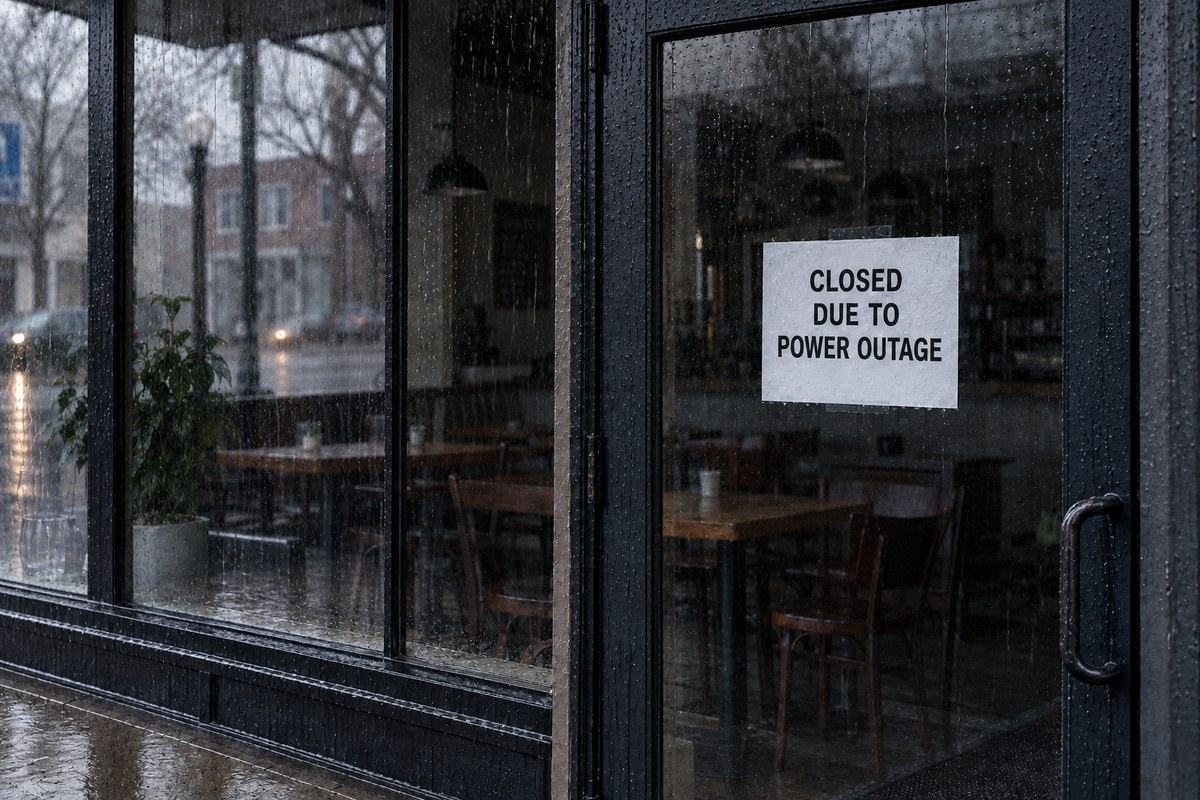
Spoiled inventory, a dark kitchen on a peak night, and staff you still have to pay. A set payout arrives fast enough to restock and reopen.
Parametric power outage coverage pays a set amount when an outage lasts longer than the hours you choose. Paired with the right deductible strategy, it can close gaps your primary policy leaves open.
Standard business income coverage generally requires physical damage and starts after a waiting period. A power outage away from your building often isn’t covered unless your policy is endorsed for it.
| Business interruption | Parametric power outage coverage | |
|---|---|---|
| What triggers it | Direct physical loss or damage. An off-site outage is typically covered only with a utility services endorsement, and only when a covered cause of loss damages the utility’s property. | An outage that lasts longer than the number of hours you choose. |
| When it starts | After a waiting period, often 72 hours, though shorter options may be available. | At the outage threshold you select, for example 12 hours. |
| How much it pays | Your documented loss of business income, adjusted after the claim. | A fixed amount you choose when you buy the policy. |
| How claims work | Documentation and investigation by the insurer’s claims team. | The outage is verified with hyper-local, real-time grid data from an independent sensor network. You confirm it and choose a payment method. |
| How fast | Depends on the size and complexity of the claim. | Payment is typically made within a few days. |
| Your insurance record | A claim on your property policy. | The carrier states its claims don’t go on your insurance record. |
Parametric coverage is designed to complement business interruption coverage, not replace it. The payout is a fixed amount and may be more or less than your actual loss.
Spoiled inventory, a dark kitchen on a peak night, and staff you still have to pay. A set payout arrives fast enough to restock and reopen.
Homeowners policies typically provide little coverage for business income. If your work stops when the power does, an outage is a business loss.
Medical and dental offices, salons, kennels, and any operation where a day without power means a day without revenue.
An illustration of how a parametric outage claim moves from outage to payment.
Example for illustration only. Thresholds, payout amounts, and availability depend on the policy and underwriting.
Power is one risk. These specialty policies address others that a standard business owner’s policy may limit or exclude.
Sudden mechanical or electrical failure, like a walk-in cooler compressor, along with the inventory it was protecting.
Lost gross profit, crisis response, and brand recovery after a covered foodborne illness, allergen, or supplier contamination incident.
Perishable stock lost to an outage or equipment failure. How it’s covered depends on your policy and endorsements, so we review it with you.
Raising the wind and hail deductible on your primary policy usually lowers its premium. A deductible buy-back policy can then reimburse most of that higher deductible after a covered loss, following the terms of the primary policy.
The strategy makes sense only when the new primary premium plus the buy-back premium costs less than your current premium, and the amount you still keep is one you can comfortably absorb.
Available for commercial properties and homes. Buy-back coverage follows the primary policy, so a loss the primary policy doesn’t cover isn’t covered by the buy-back either.
Enter annual premiums from real quotes to see whether the combination saves money.
Illustration only. Compare quotes with matching limits and terms, and remember the amount you retain after the buy-back.
We’ll review your current coverage, then show you where a parametric policy or deductible strategy fits.